
The Eemster Pattern: How My Son’s Find Challenges the Vermaning Skeptics
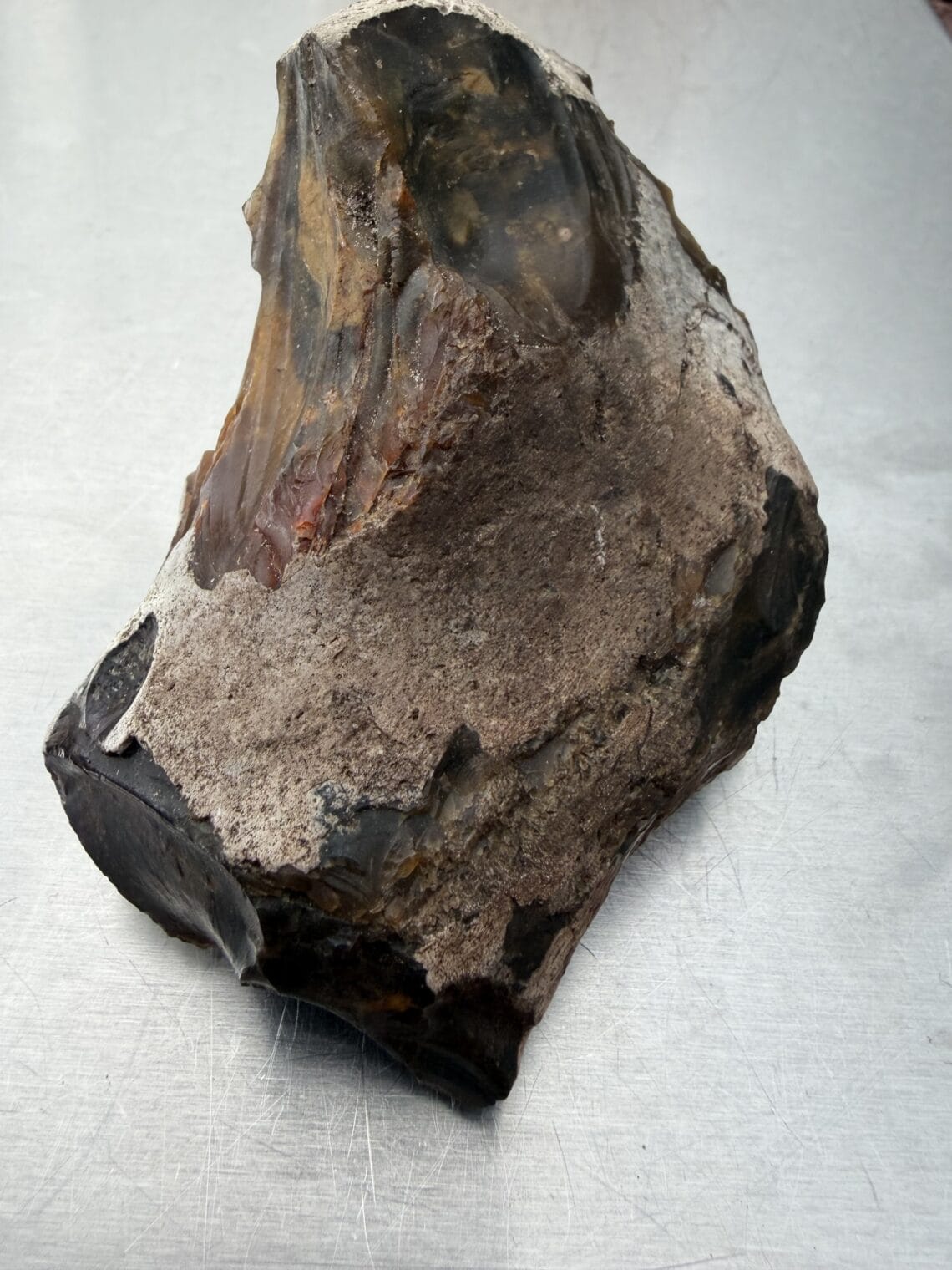
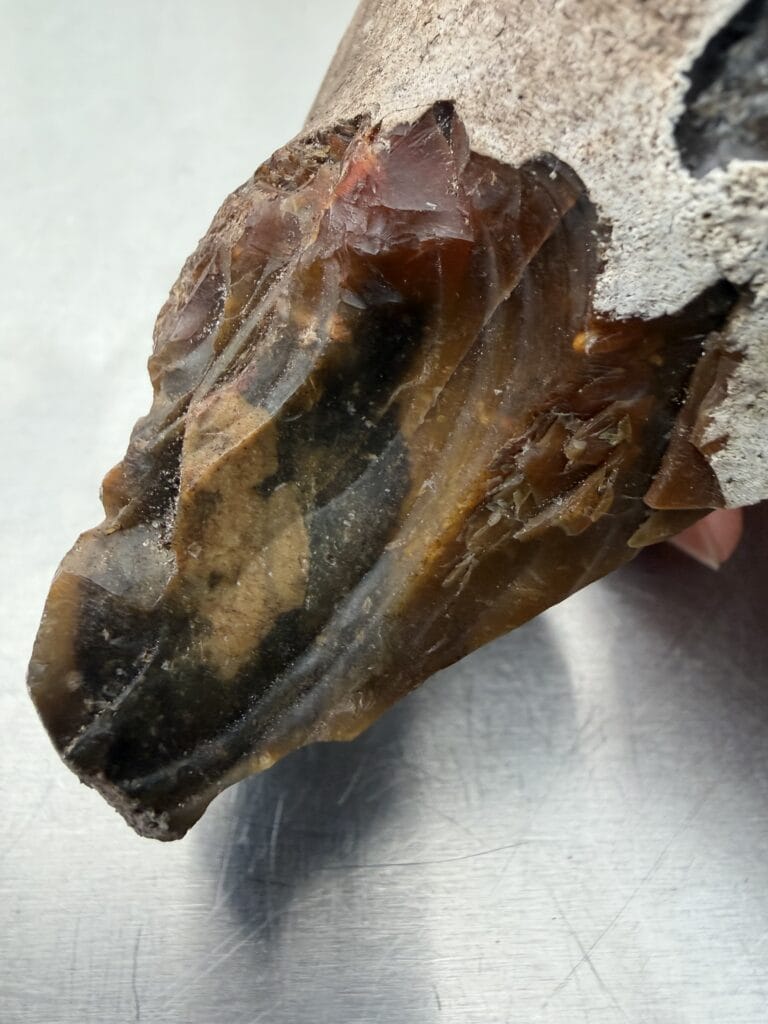
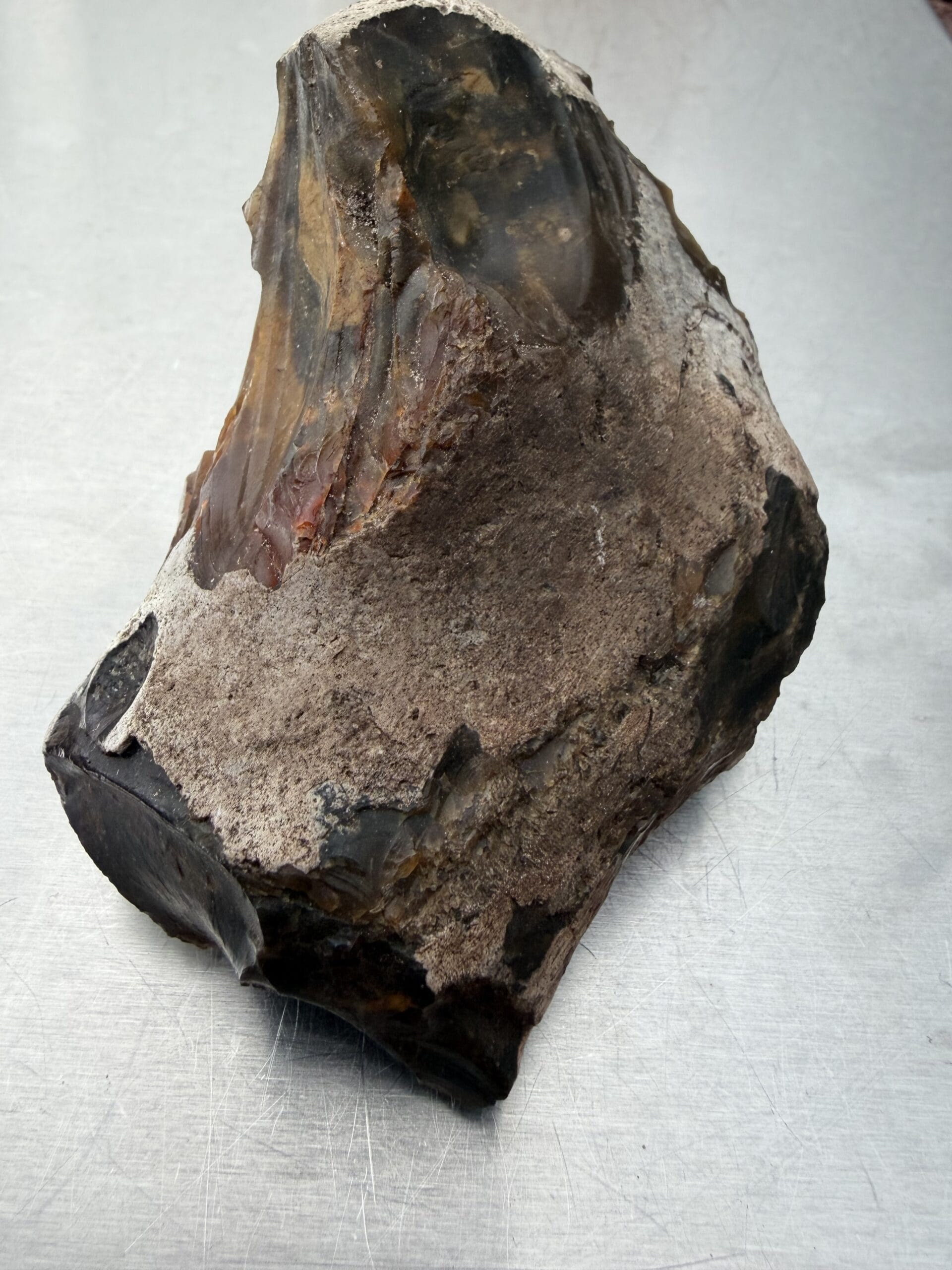
When we look at Middle Paleolithic artifacts in the Netherlands, we aren’t just looking at the tools of Neanderthals; we are looking at time capsules shaped by the earth itself. Recently, while investigating the known location of Eemster in Dwingeloo, my son found a second flint core that immediately forced me to pause.
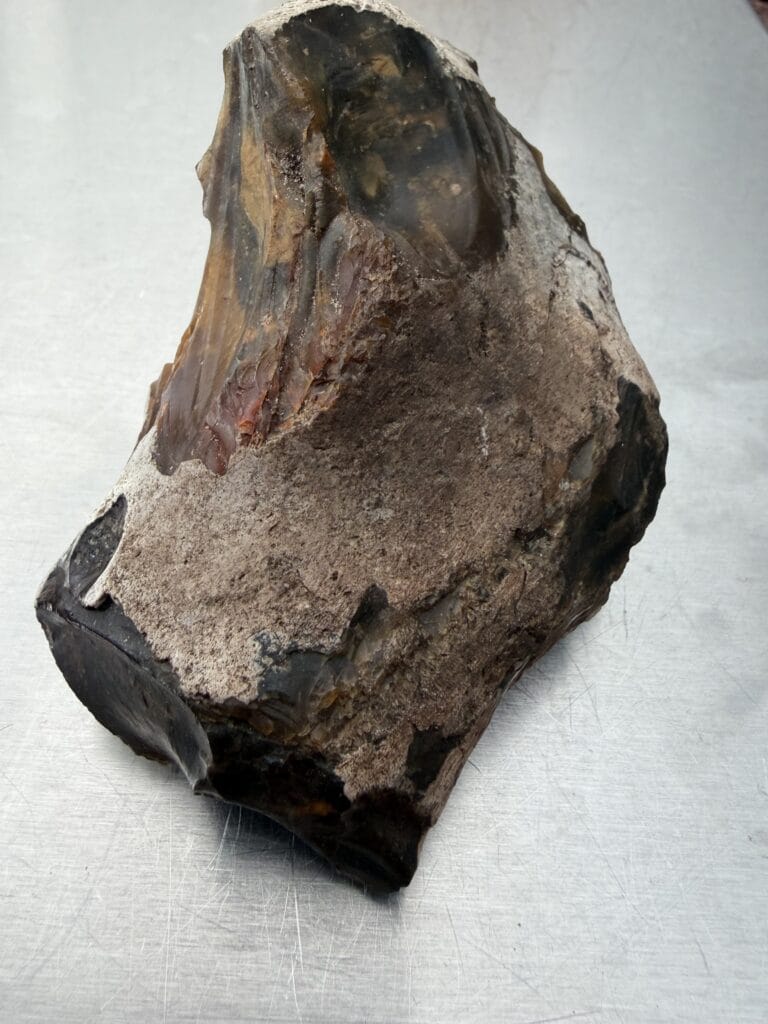
It didn’t shine. Instead, it possessed a distinct, dull matte patina.
For anyone familiar with the history of archeology in Drenthe, this matte texture rings a massive bell. It is the exact surface finish famously observed on several key pieces within the controversial Tjerk Vermaning collection. Finding this second core here is highly significant because it helps clear up a mystery that has puzzled researchers for decades and establishes a clear, repeatable pattern for the site.
From Anomaly to Pattern: Two Cores, One Unique Horizon
A single artifact can always be questioned or set aside as a fluke. But this new discovery follows a previous matte core found at the exact same Eemster location.
When you compare the two, the connection is undeniable. Both pieces have completely bypassed the classic high-gloss polish often seen on regional flints, sharing a uniform, dull, leached surface texture instead. Having two distinct cores displaying identical weathering states proves we are dealing with a consistent, localized geological reality, not an isolated anomaly or a featureless stone.
A Palette of the Earth: The Mahogany and Amber Core
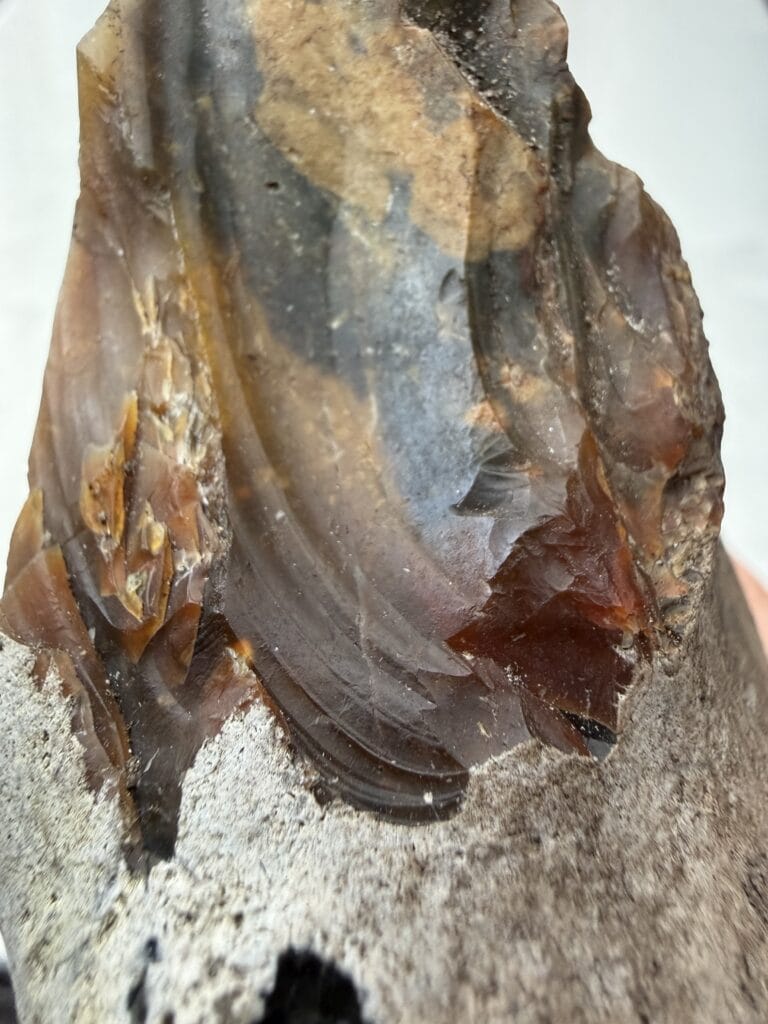
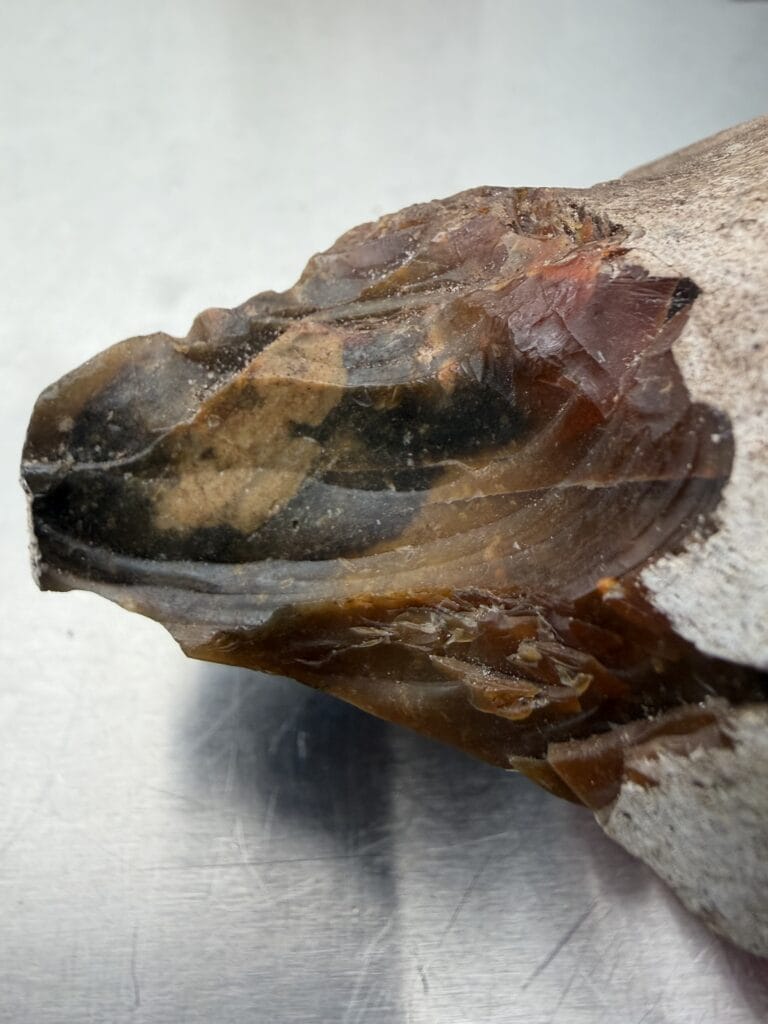
What makes this second core visually striking is its complex, layered color profile, showing how different parts of the stone reacted to millennia in the ground. The innermost struck surfaces display a deep, smoky charcoal-grey to near-black hue, representing the high-quality, dense Northern erratic flint targeted by Neanderthal toolmakers.
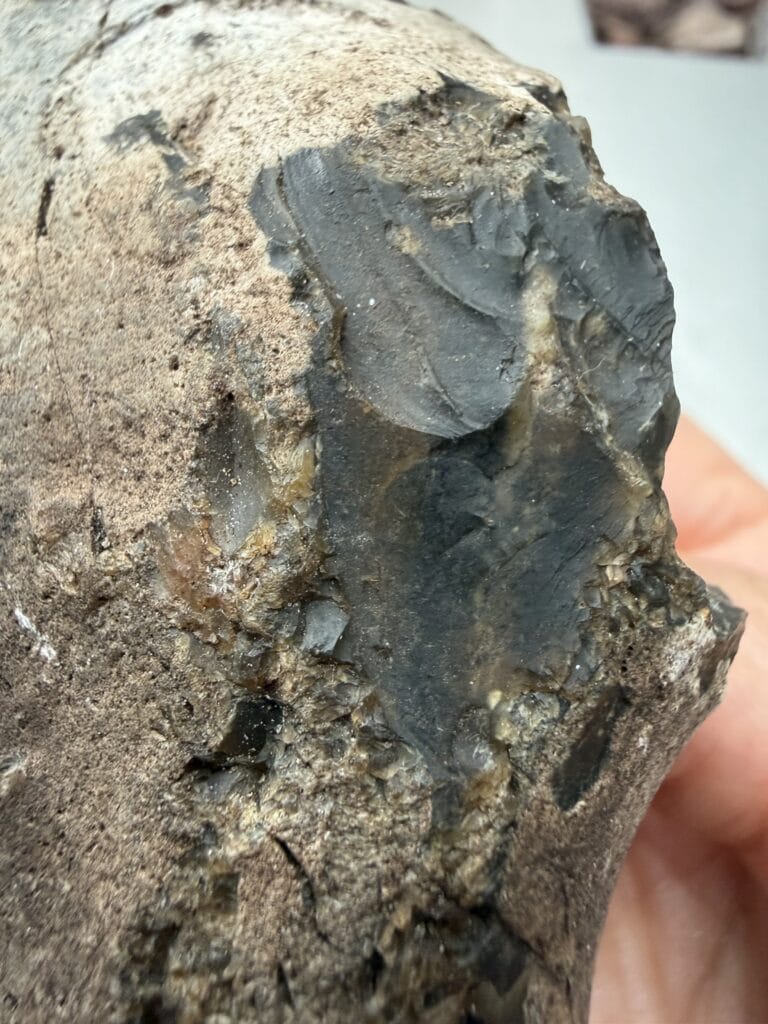
Wrapping around this dark flint are gorgeous transitions into a rich, deep mahogany, warm amber, and caramel tones. This stunning coloration is a result of long-term iron or mineral infiltration from the Drenthe soils bleeding into the outer micro-fractures of the stone. Contrasting sharply with these dark and mahogany interiors is a thick, chalky, greyish-white natural rind or cortex that provides a perfect frame for the human modifications.
The Human Touch: Anthropogenic Marks Standing Out
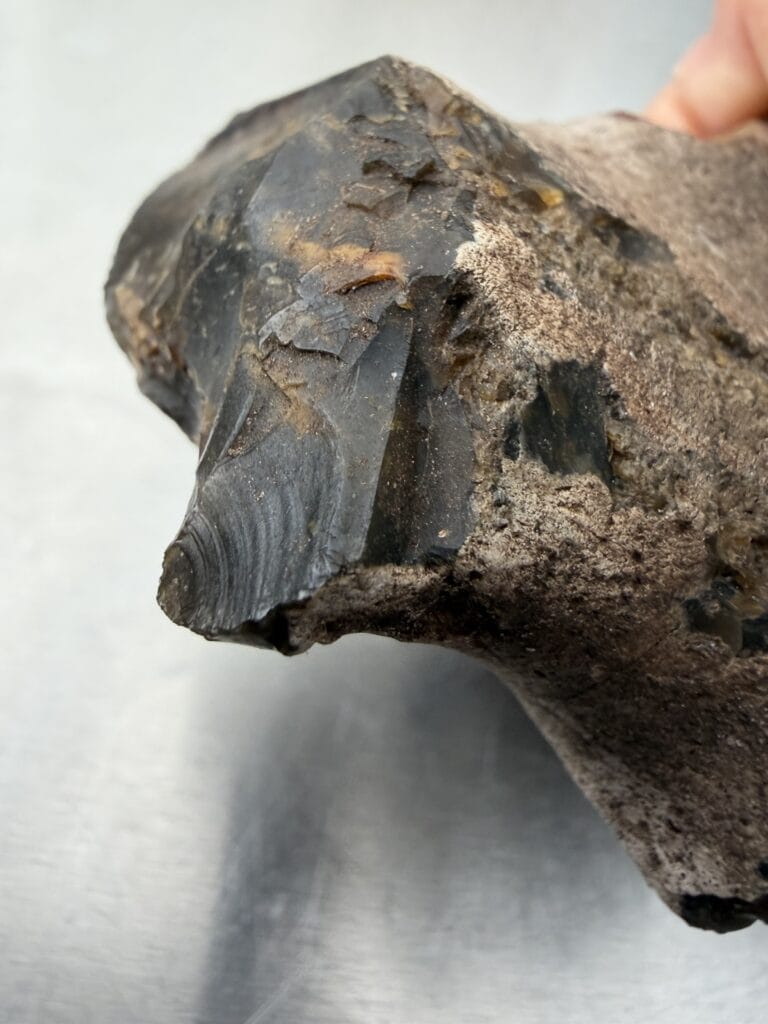
This isn’t a geofact shaped by natural forces like frost or rivers. A close inspection of this second Eemster core reveals undeniable anthropogenic marks that stand out sharply against the matte texture.
The stone features deep, intentional negative flake scars resulting from a systematic reduction strategy. Clear, fluid-like waves of percussion emanate from the ancient impact points right under the matte finish, and sharp, abrupt step fractures from manual strikes are plainly visible.
The Vermaning Connection: Deep-Plowing and Mixed Assemblages
These matte cores bring us right back to the sites where Vermaning made his discoveries. On those locations, agricultural deep-plowing—cutting much deeper than standard seasonal plowing—violently churned up layers of earth that had remained separated for over 50,000 years.
What resulted was a highly confusing, mixed assemblage showing a bewildering combination of high-gloss, shiny flints mixed right in with deeply matte pieces. To overly skeptical critics, this stark visual difference made the discoveries look inconsistent, but the reality is a beautiful lesson in taphonomy, which is the science of how items preserve over time.
One Site, Two Worlds: How Patinas Form
The presence of both shiny and matte flints on the same deep-ploughed site doesn’t mean they don’t belong together. It simply means they were preserved under entirely different micro-circumstances before being brought to light.
When this deeper-than-usual plowing ruptures these distinct micro-environments, it brings everything to the surface at once. A piece trapped for millennia in a pocket of dense, stagnant boulder clay undergoes subtle chemical leaching where the outer mineral structure is microscopically dissolved, leaving a porous, light-diffusing matte surface like the ones seen on our two Eemster cores.
Meanwhile, a stone just a short distance away that sat in an active, water-bearing sand layer gets microscopically polished by moving fine sediments and mineral-rich groundwater, leaving it with a high-gloss finish. The plow tosses them onto the surface side-by-side, creating a mixed picture from a shared homeland.
Why Every Piece Matters: Moving Beyond Pretty Flints
In amateur archeology, there is sometimes a temptation to only value the high-gloss, pristine, aesthetically perfect pieces. But dismissing matte or heavily patinated artifacts as unimportant or rubbish is a serious scientific error.
If we only look at the shiny pieces, we are voluntarily throwing away half the data. Heavily weathered tools tell us exactly what kind of soil environments existed thousands of years ago. To understand the true scope of Neanderthal presence at Eemster, we must document the site exactly as the earth preserved it—matte surfaces, mixed assemblages, and all.
Conclusion
Finding this second matte core at Eemster confirms that the dark, mahogany-stained, matte surfaces found in the wider Dwingeloo/Vermaning horizon are perfectly natural, expected variations of regional Middle Paleolithic preservation. Each piece tells two stories: first, of the ancient hands that struck it; and second, of the quiet, changing earth that preserved it in color.


 wpDiscuz


