

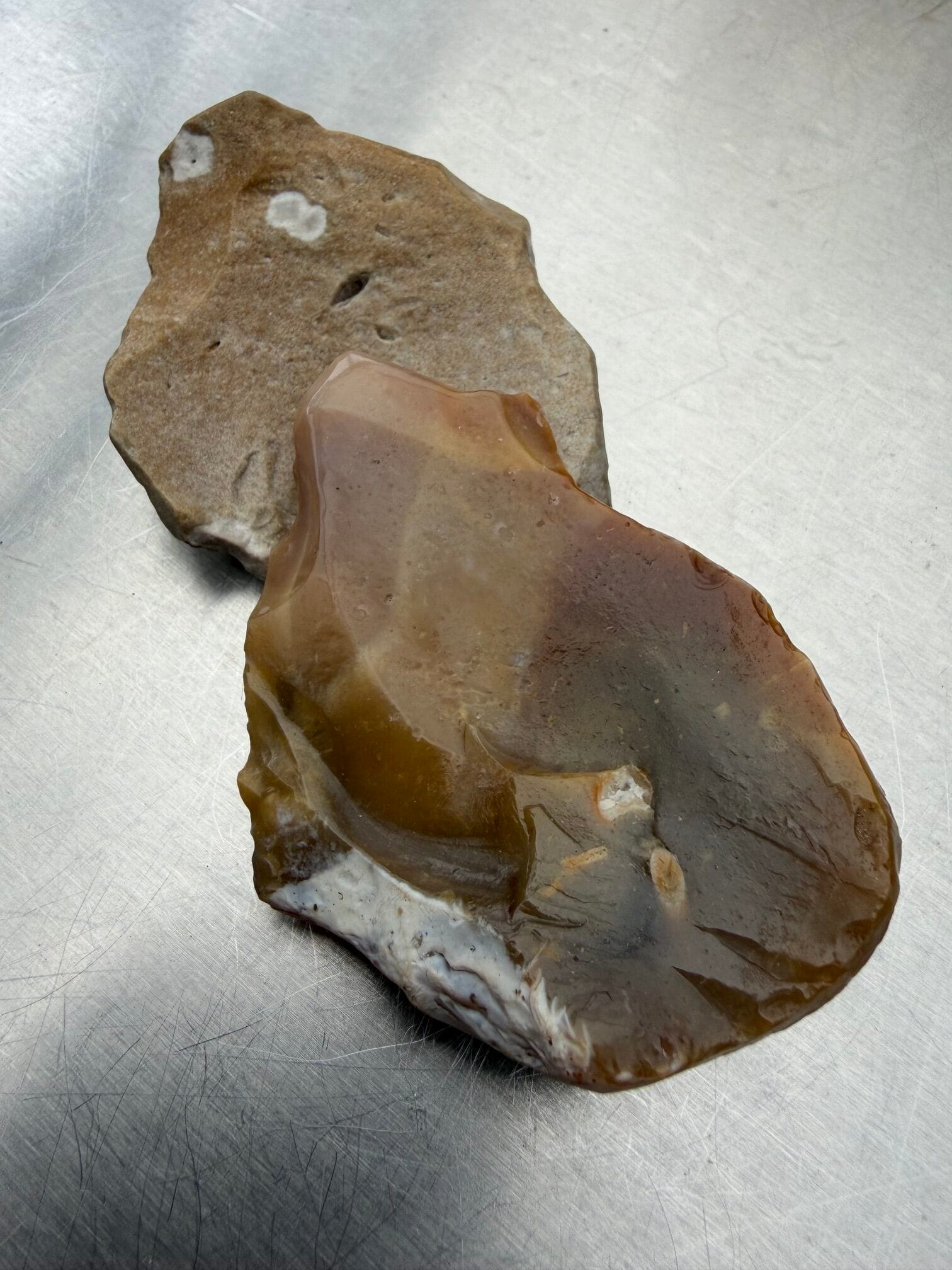
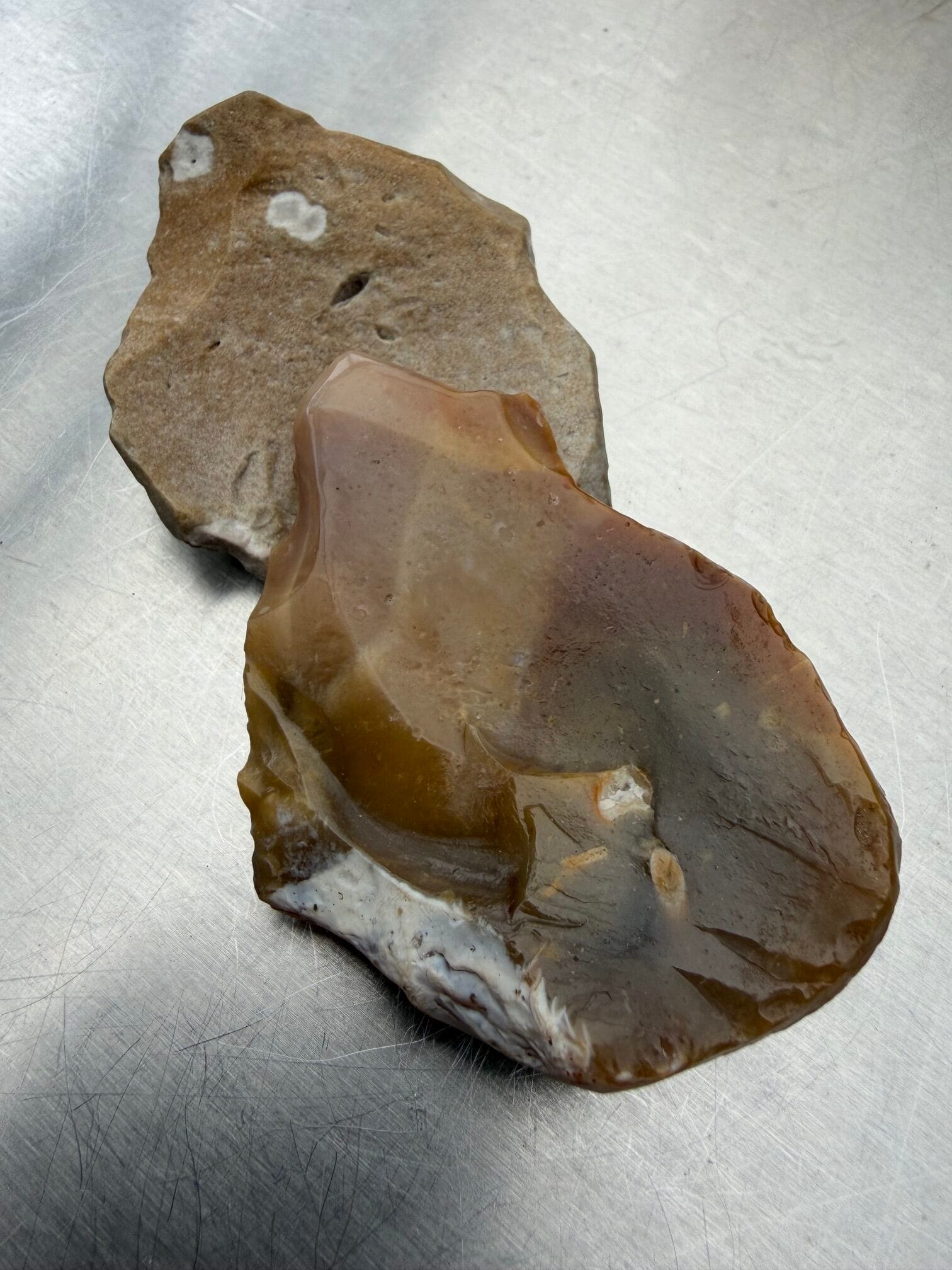
Found in the vicinity of the Eemster site, at first glance it’s a beautiful piece of honey-brown flint, but the fingerprints of an ancient maker are all over it. This anthropogenic piece is a masterclass in prehistoric technology.
The Evidence:
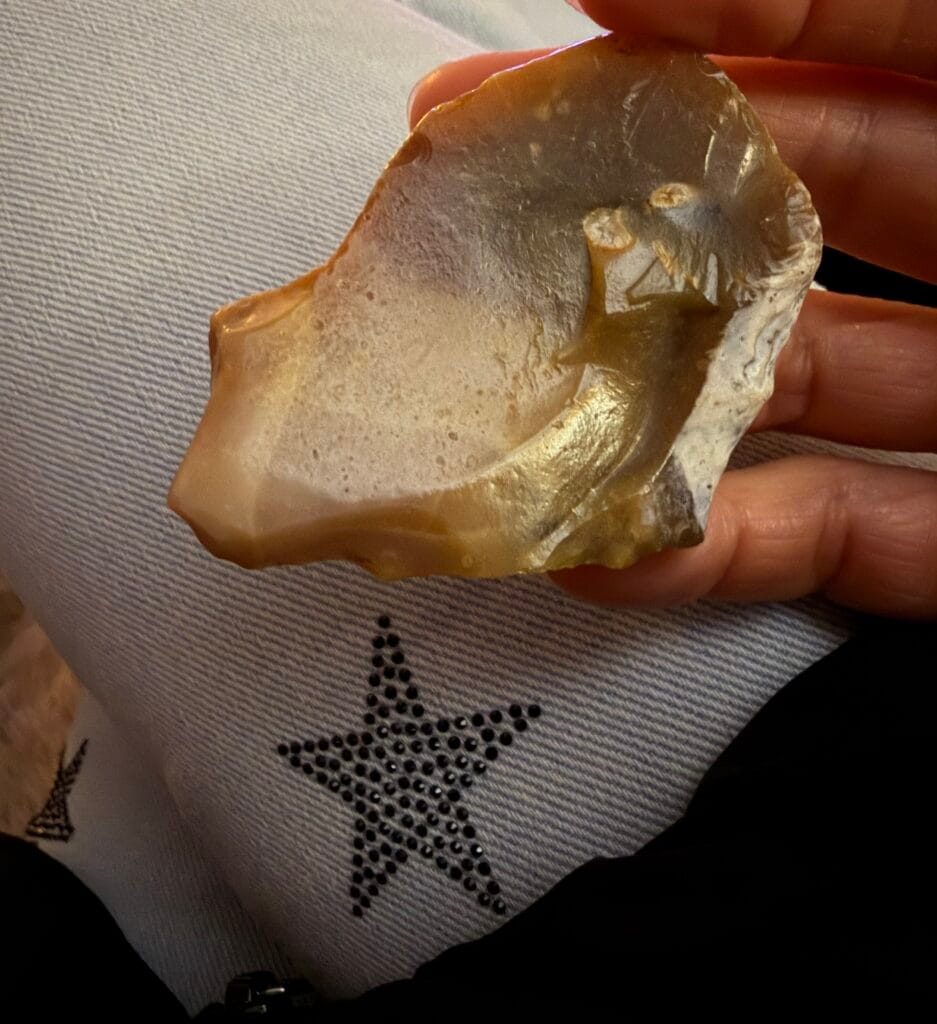
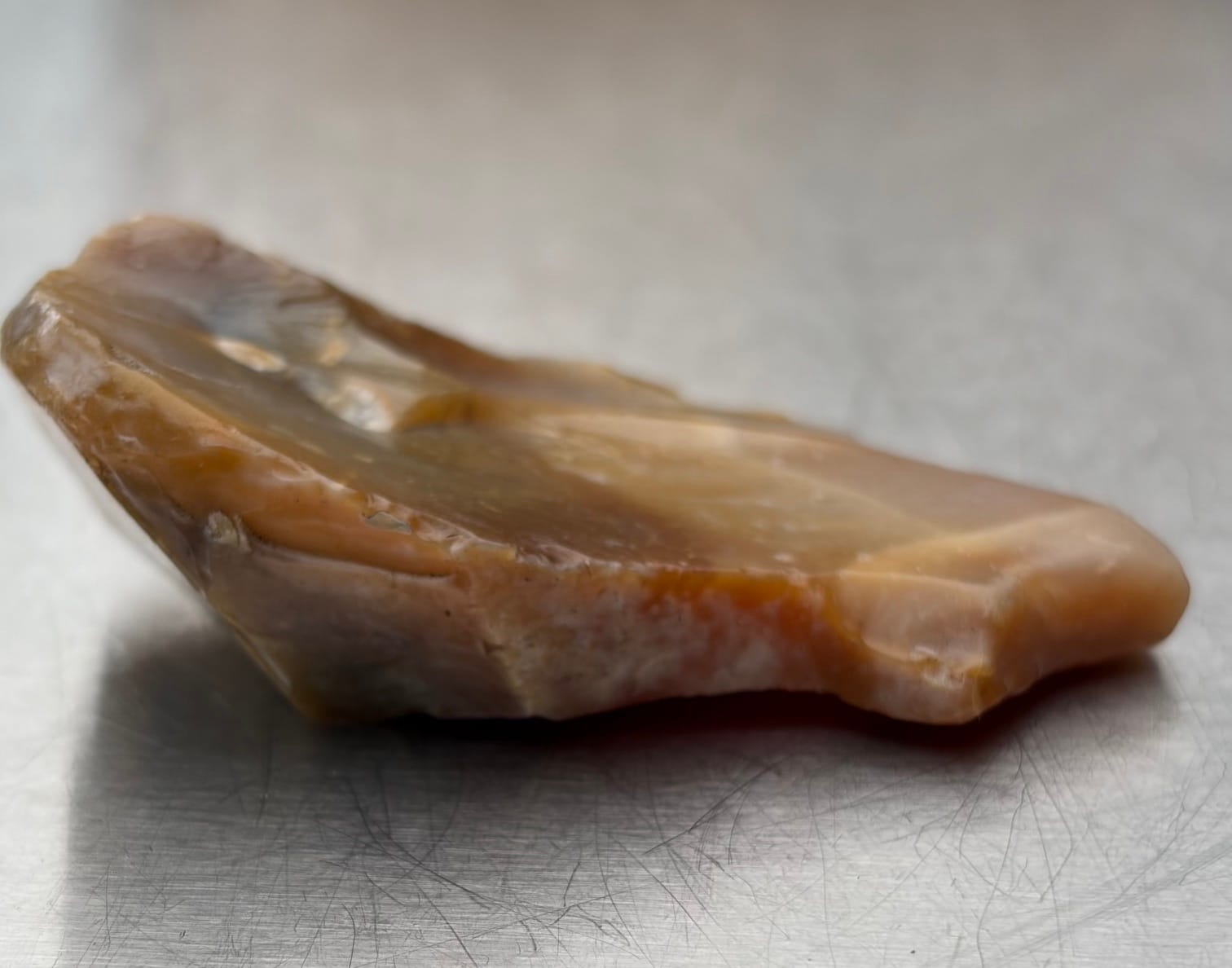
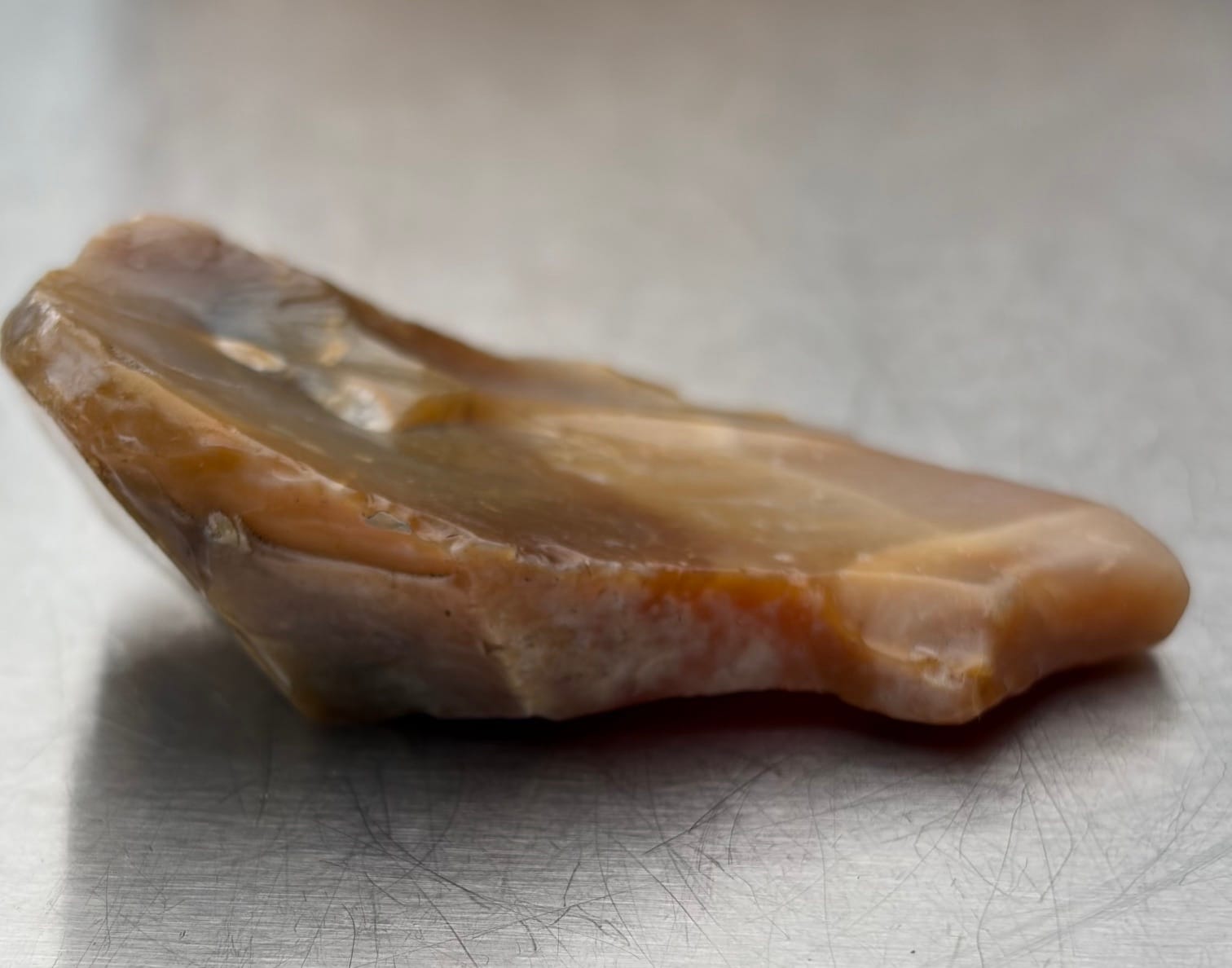
Plano-Convex Geometry: A classic hump-backed profile. The flat ventral side allowed the tool to glide, while the domed dorsal side provided the structural mass needed to handle high pressure without snapping.
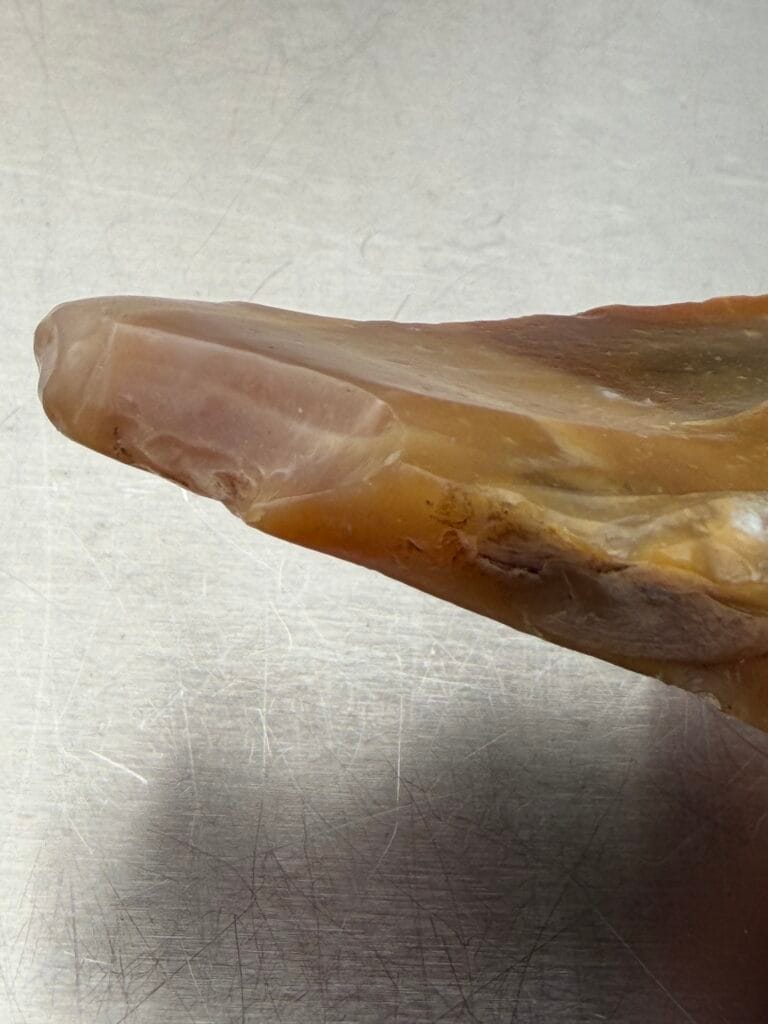
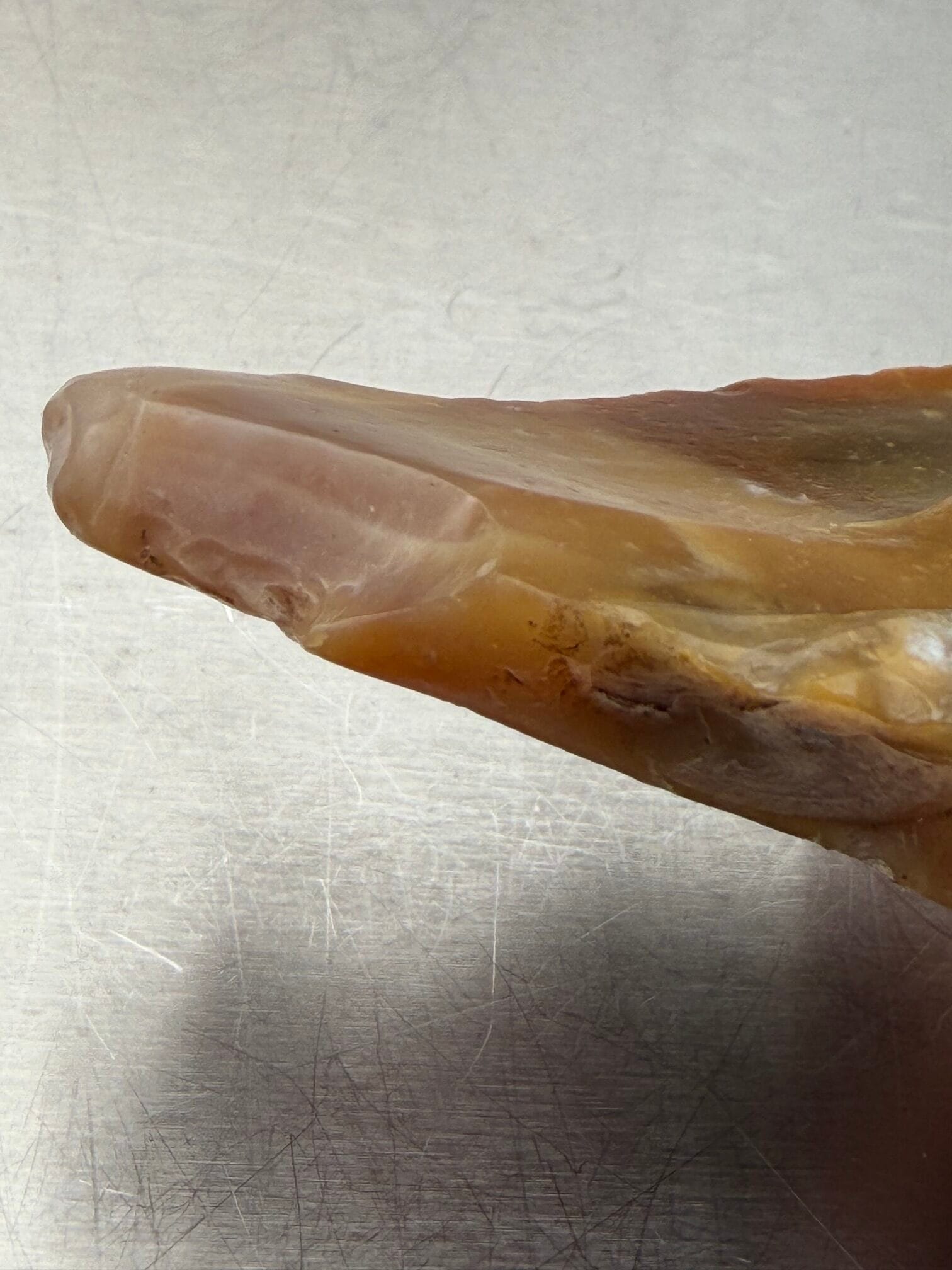
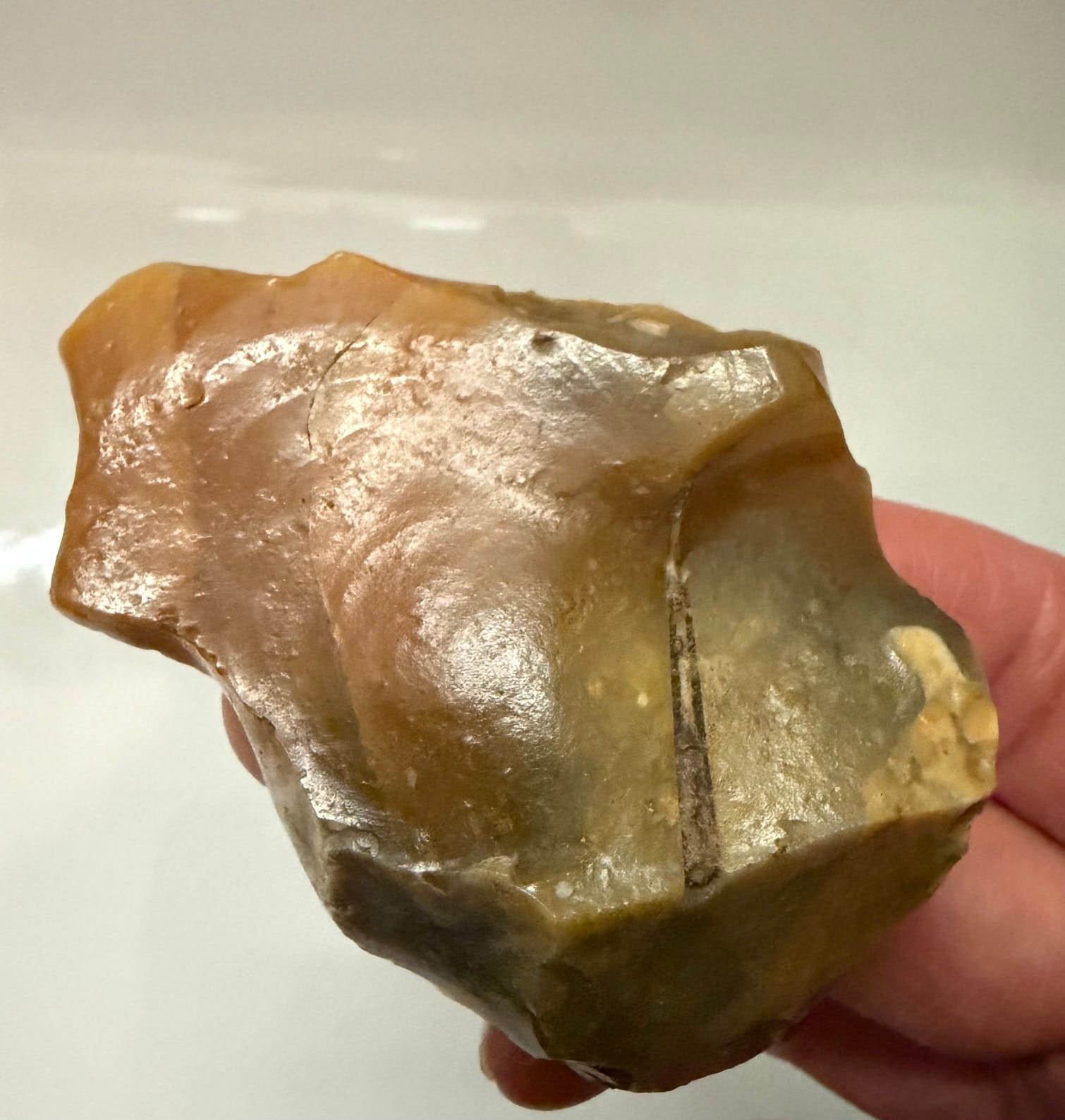
Conchoidal Ripples and Deep Negative Scar: The prominent, scooped-out indentation across the surface is a negative flake scar—the physical footprint left behind when the maker struck off a previous flake. Combined with the undulating percussion ripples, it proves a deliberate, multi-step reduction sequence.
Marginal Expedient Retouch: You won’t see deep zig-zags here. Instead, there is subtle, marginal nibbling along the border. Because the Scandinavian flint was already razor-sharp, the maker only used minimal retouching to stabilize the edge for immediate work.
Finding a piece with this specific shape and wear in the vicinity of the Eemster site means it could very well be a discarded piece of technology from an archaic human hunter who roamed the area tens of thousands of years ago.









 wpDiscuz


