
The Moment of Discovery: Intuition vs. Nature
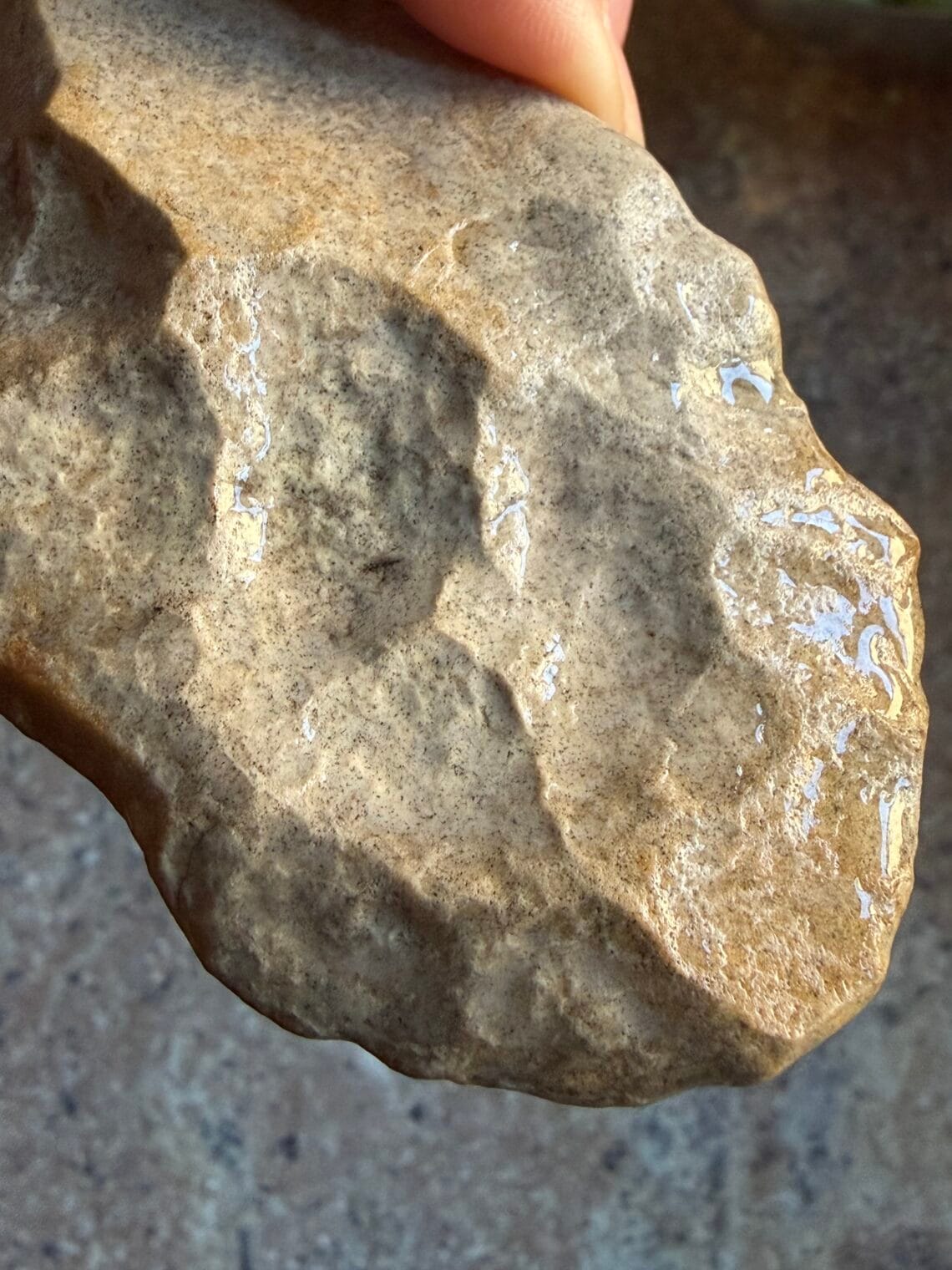
Finding Stone Age tools in the Northern Netherlands is a unique challenge. The soil is filled with “erratic” stones brought here by glaciers, many of which look like tools but are just broken by nature. While surveying a field in the Eemster region, I handled many stones over several hours.
When I picked up this specific piece, I knew immediately it was different. I could see the systematic pattern where flakes had been removed. I realized right away that some might call it “just a stone” because the edges are heavily weathered and “softened” by being in the ground for tens of thousands of years. However, my assessment is based on seeing past that weathered surface to the human intent underneath.

The Authority of Experience: The South African Connection
My identification of this artifact is informed by extensive consultation with South African lithic specialists and veteran surveyors. I have worked closely with a friend who grew up on a farm in the Northern Cape, where his father discovered Acheulean handaxes on their own land for decades.
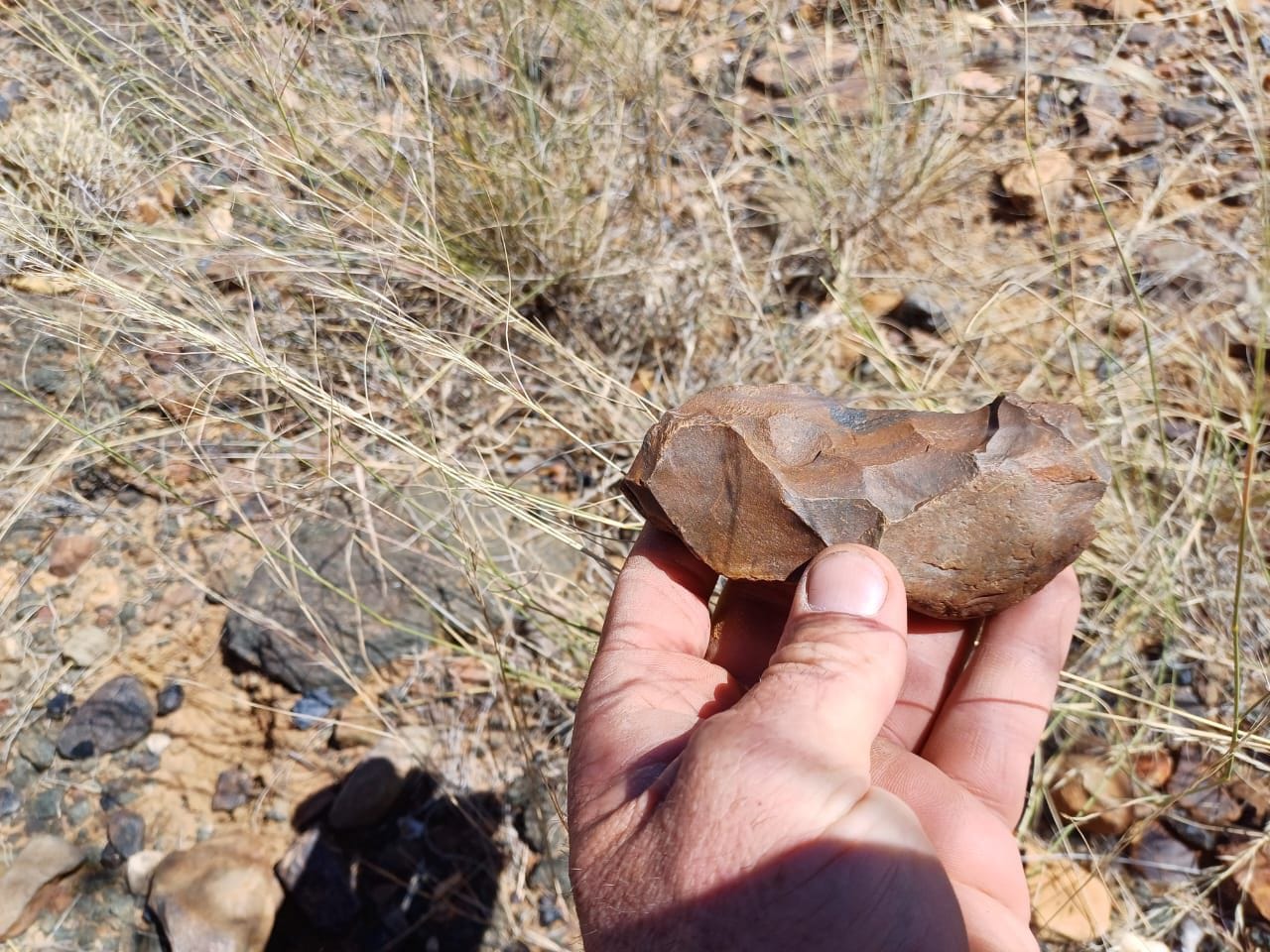
In the Northern Cape, the Stone Age record is omnipresent. For someone who has lived among thousands of Stone Age tools from childhood, recognizing the human “touch” on a stone is not a matter of textbook study, but a deeply ingrained practical intuition. This “high-volume” experience is a vital tool when analyzing stubborn materials like Drenthe erratics. It allows for the identification of specific strike mechanics that those accustomed to a much sparser archaeological record might overlook.
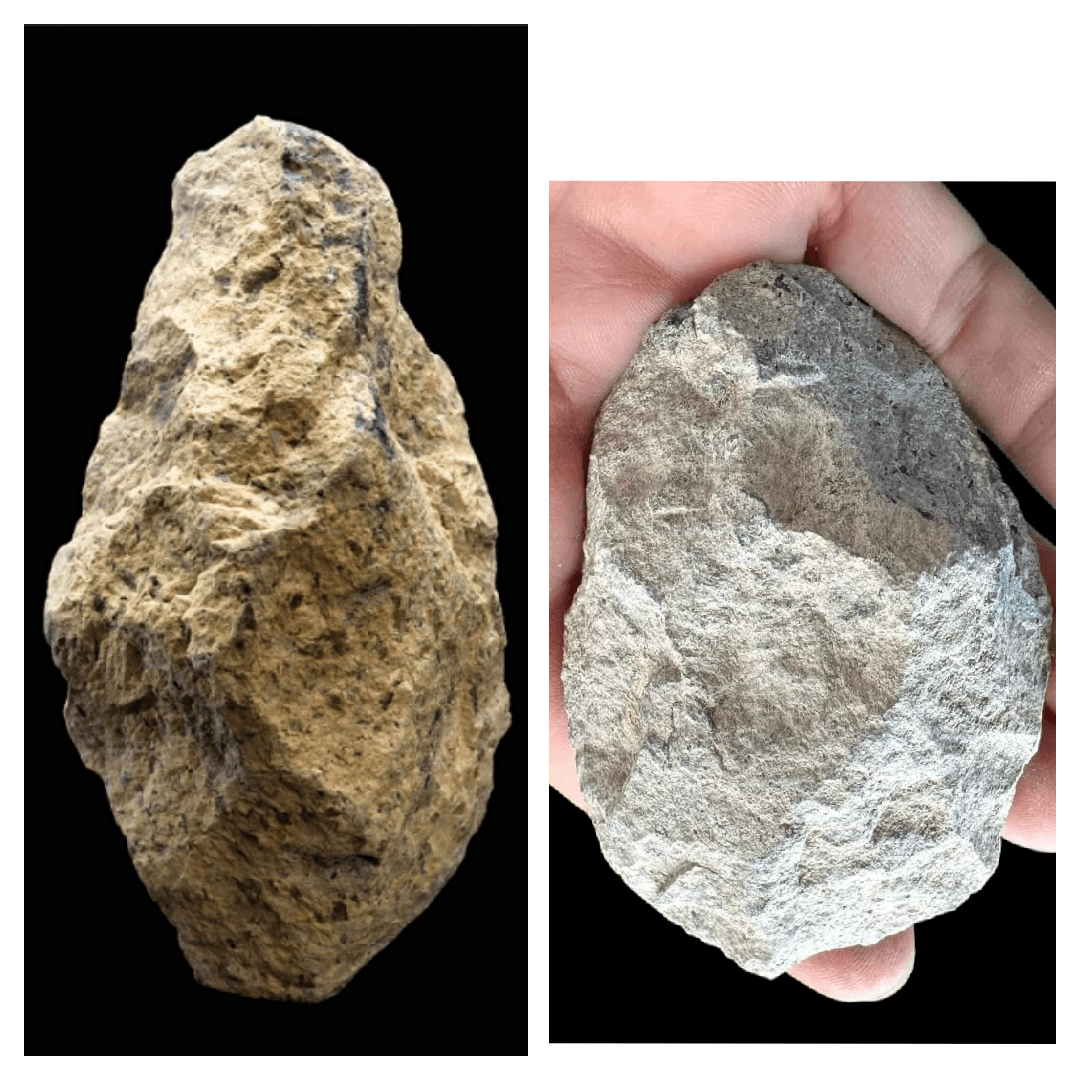
This same intuition is central to the accompanying images, which show similar finds from a friend in Kenya. Her stones exhibit a near-identical character, defined by a heavily weathered and granular surface. While the patina of my artifact differs from the Kenyan specimens due to their distinct environmental origins, the underlying morphology is strikingly similar. Looking through this coarse, eroded exterior requires a specific way of seeing; only then do the underlying human modifications and intentional strikes become visible. The grainy texture of these objects initially masks their origin, but the structural traces of craftsmanship remain undeniable.

Intentional Marks vs. Natural Damage
It is important to know the difference between a man-made mark and natural damage, such as “potlids.” A potlid is a circular pit that pops out of a stone due to extreme frost or fire. It looks like a small crater and has no clear direction or point of impact.
The marks on this tool are different. They show a clear direction of force. Each chip started at the edge and traveled inward. These marks are also clustered exactly where you would want a sharp edge. This shows “retouch”—the act of a human intentionally shaping a tool—rather than random damage from the environment.

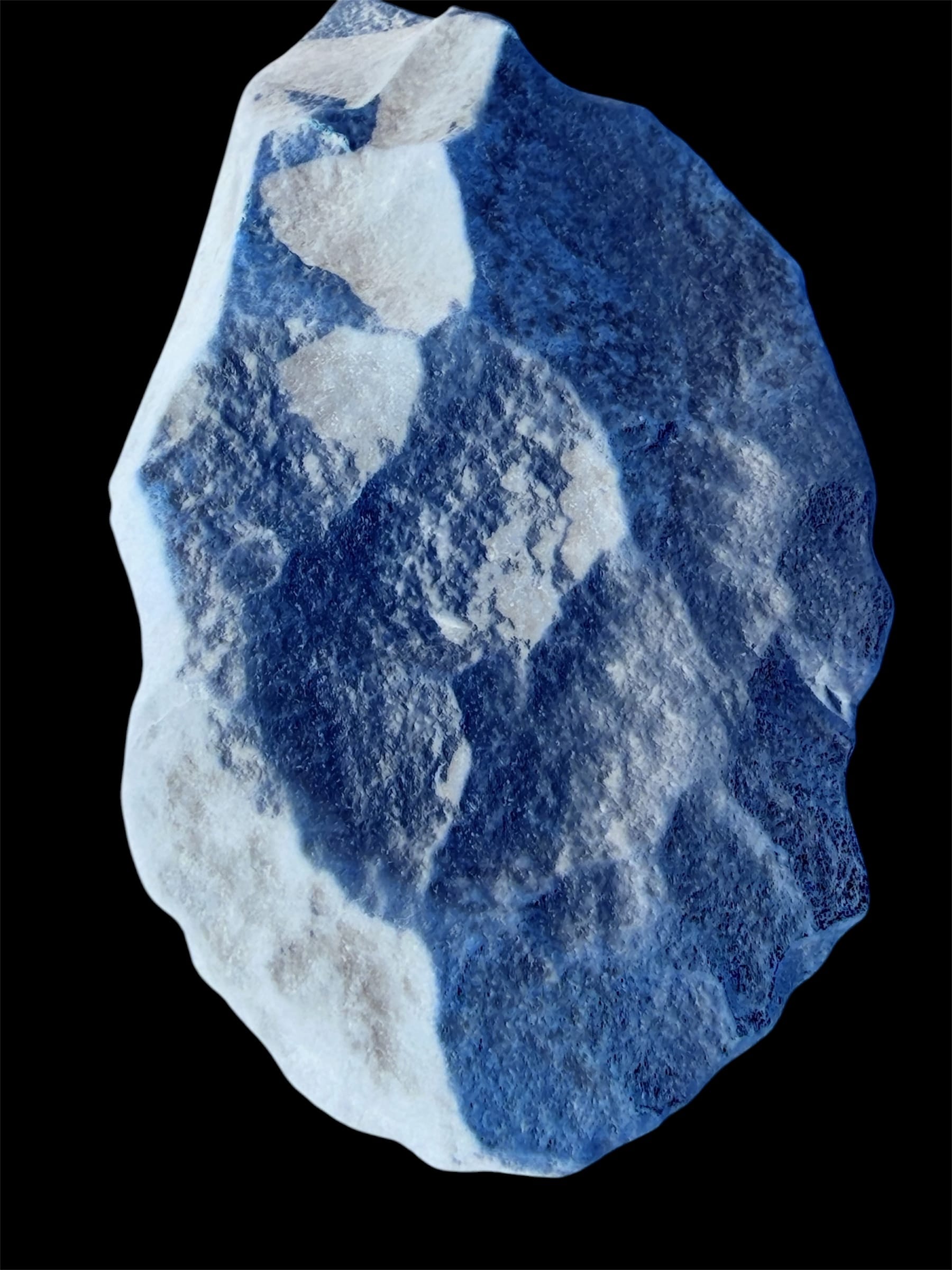
Analyzing the Negative: Visualizing Early Human Design
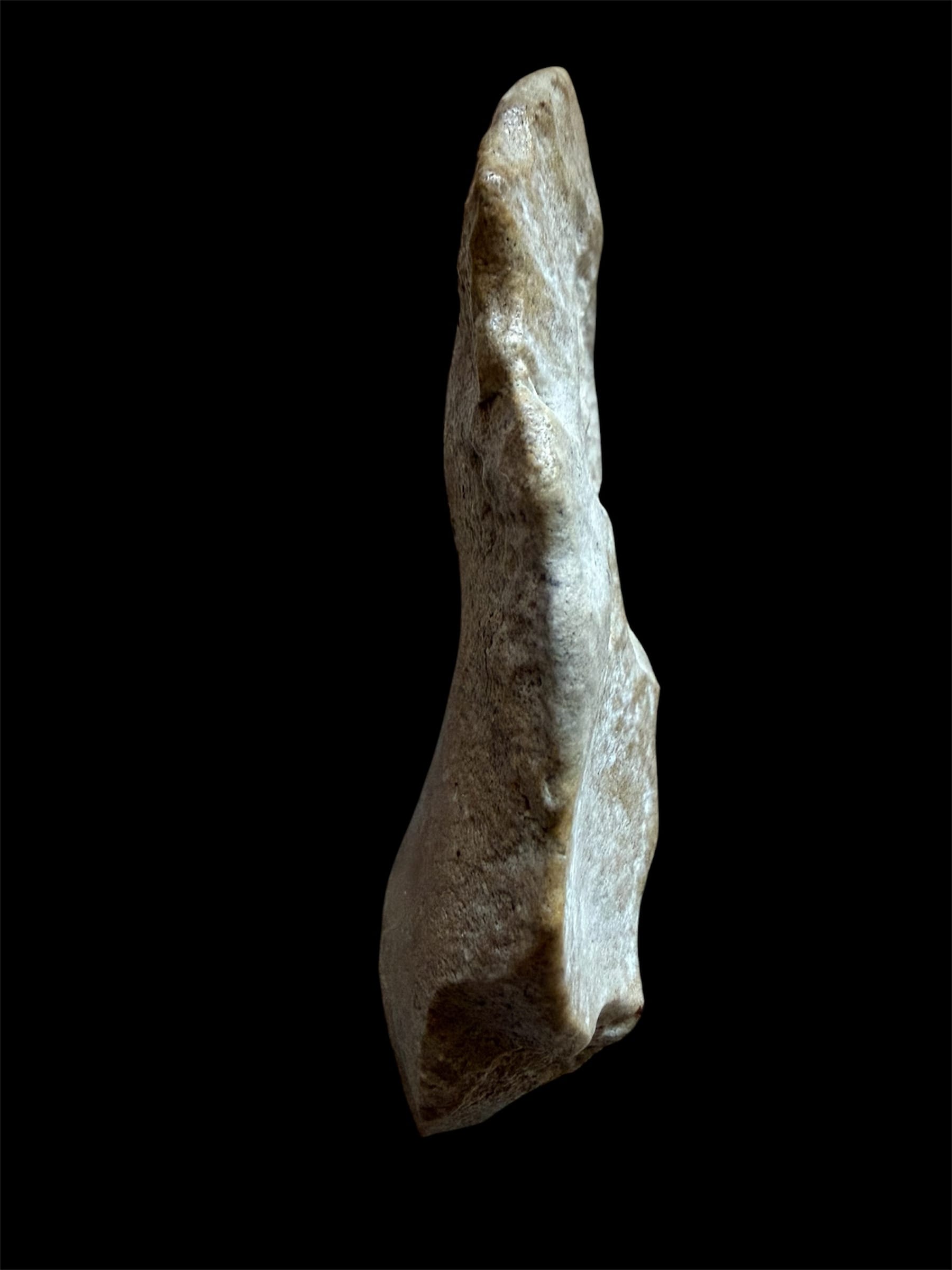
To test the technical logic of this tool, I applied a negative filter (invert) to the profile shot. This specific visualization enhances features otherwise hidden by heavy weathering. Observe how the once-light edges now appear as dark, sharp lines. This highlights the directional flow of the alternate flaking sequence, creating a precise ‘S-curve’ along the functional margin. By inverting the colors, we accentuate the deeply ‘etched’ topography of the surface, demonstrating the profound age of the patina and the deliberate, controlled hand that sculpted this heavy-duty erratic material.
The Logic of Material Selection
The diagnostic value of this find is reinforced by the behavior visible on the field. This was not an isolated find, but part of a localized cluster of specific quartzitic erratic flint. While the surrounding area was scattered with various types of “honey-colored” flint, this location showed a clear concentration of the same tough, grey material in different stages of being tested and worked.
This pattern indicates a deliberate choice: the maker specifically sought out and gathered this durable stone to create a robust tool. Nature does not selectively gather one specific type of stone and concentrate it in one small workspace; only a human hand, with a specific task in mind, creates such a consistent pattern.
Supporting Evidence: The Diagnostic Flake


“On the same location, I recovered a secondary diagnostic piece: a clear lithic flake. Unlike the heavier uniface, this piece represents the crisp, intentional removal of material from a core.
The bulb of percussion (the point where the stone was struck) and the conchoidal ripples (the waves created by the impact) are unmistakable to an experienced eye.
Conclusion
By looking past the weathered “skin” of the stone and applying expertise gained from the world’s richest Stone Age landscapes, we can identify the persistent traces of the human hand in the Drenthe soil. It serves as a reminder that the Neanderthal record in the Netherlands is not just about what is found, but about how we choose to look at it.

