
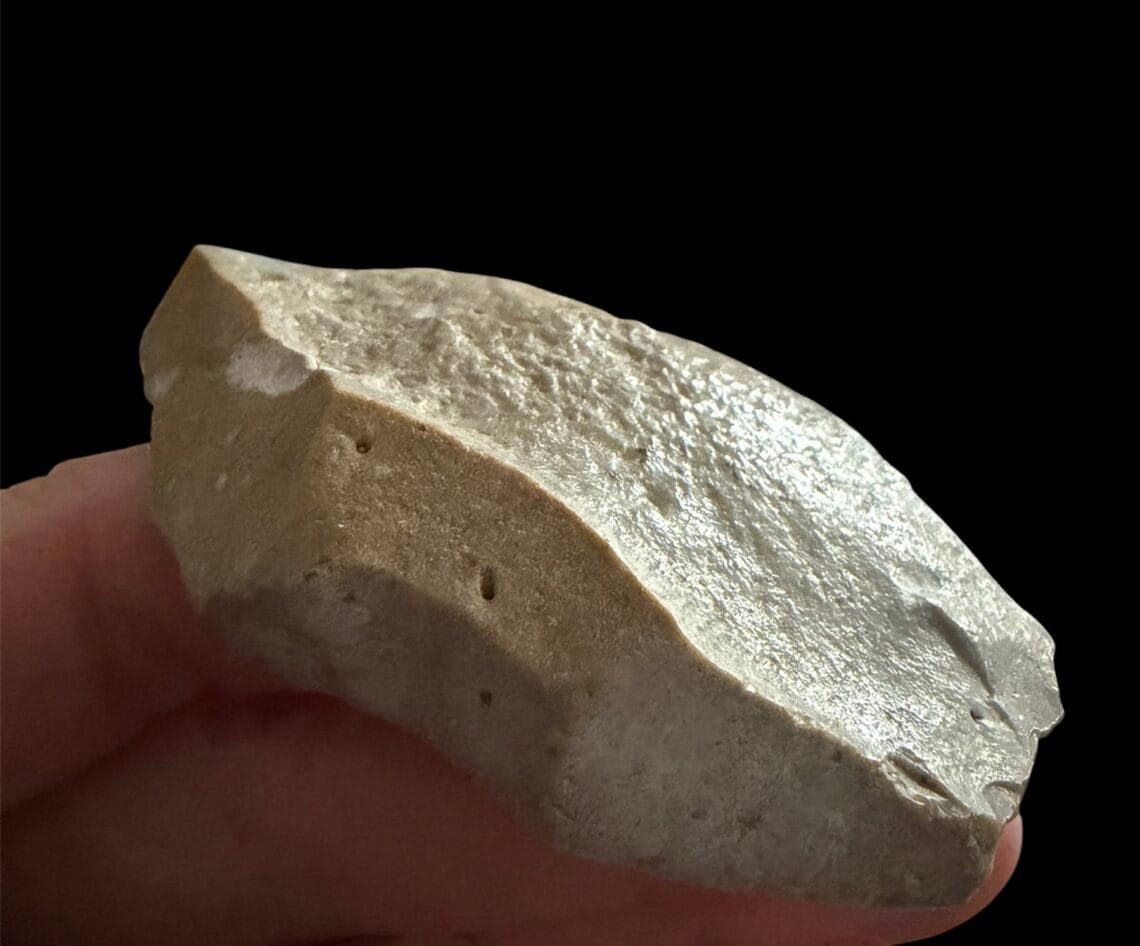
Nature or Artifact? A Closer Look at the Dwingeloo Flake
While nature can occasionally mimic human craftsmanship, several features on this piece found near the Eemster site in Dwingeloo suggest it is a prehistoric artifact rather than a simple frost-split stone:
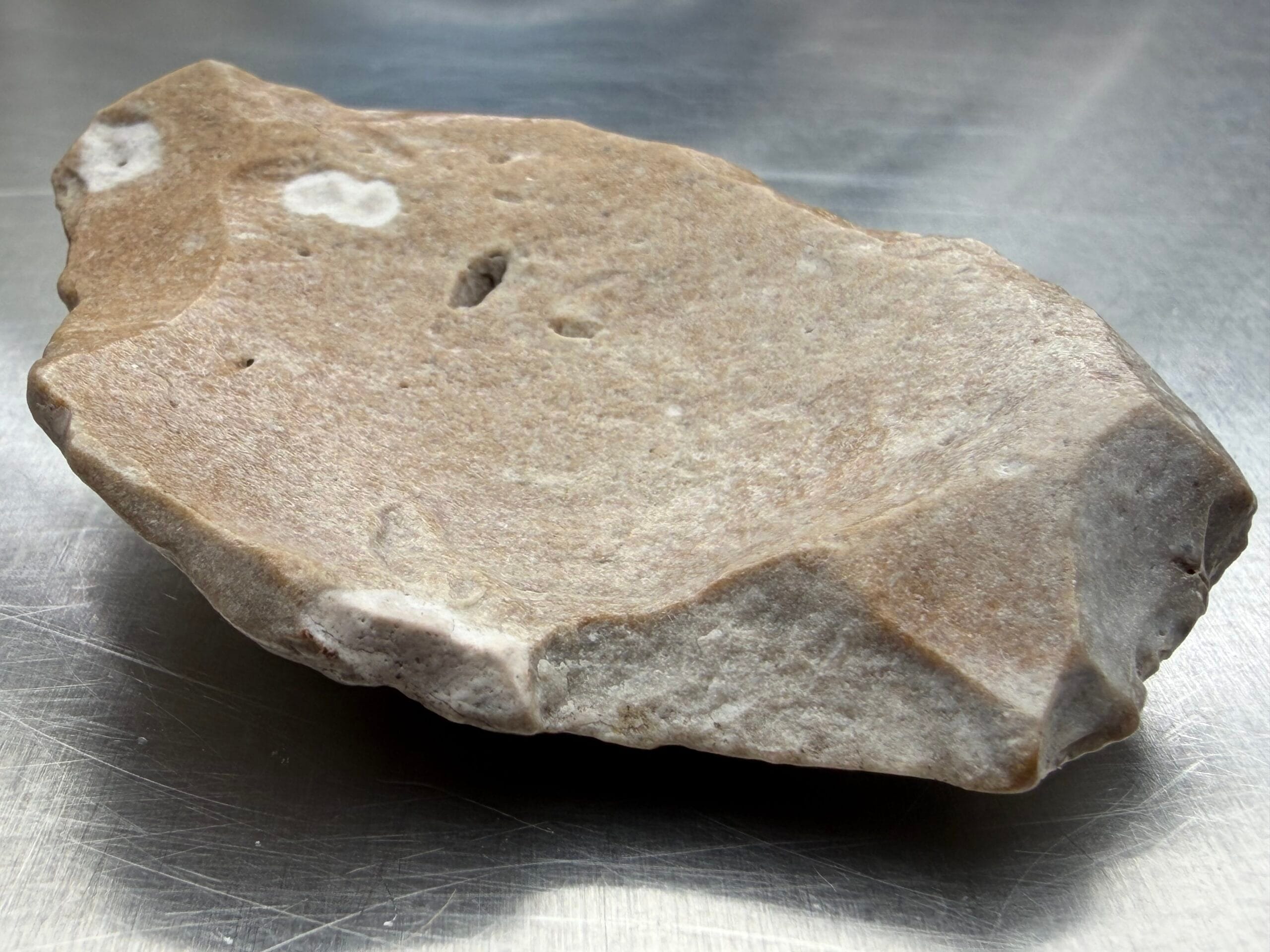
Impact Features: The stone shows a robust bulb of percussion-a swelling caused by a deliberate strike. This indicates the flake was intentionally knapped from a larger core rather than shattered by natural forces.
Intentional Edges: The thinner sides display fine, semi-regular indentations. These closely resemble retouching – the purposeful sharpening of an edge to create a tool – which stands out from the random, jagged chipping typically seen on natural frost-splits.
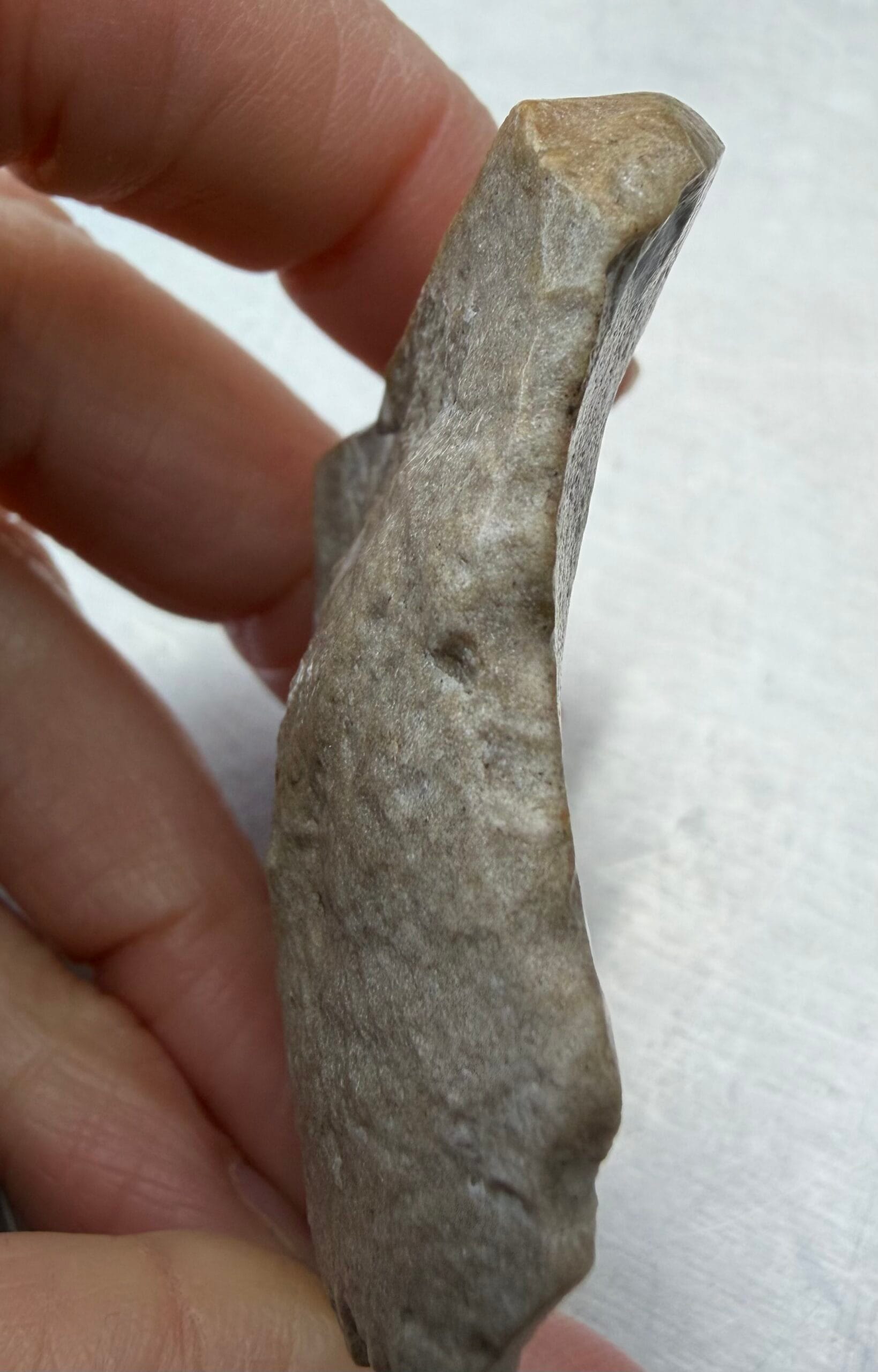
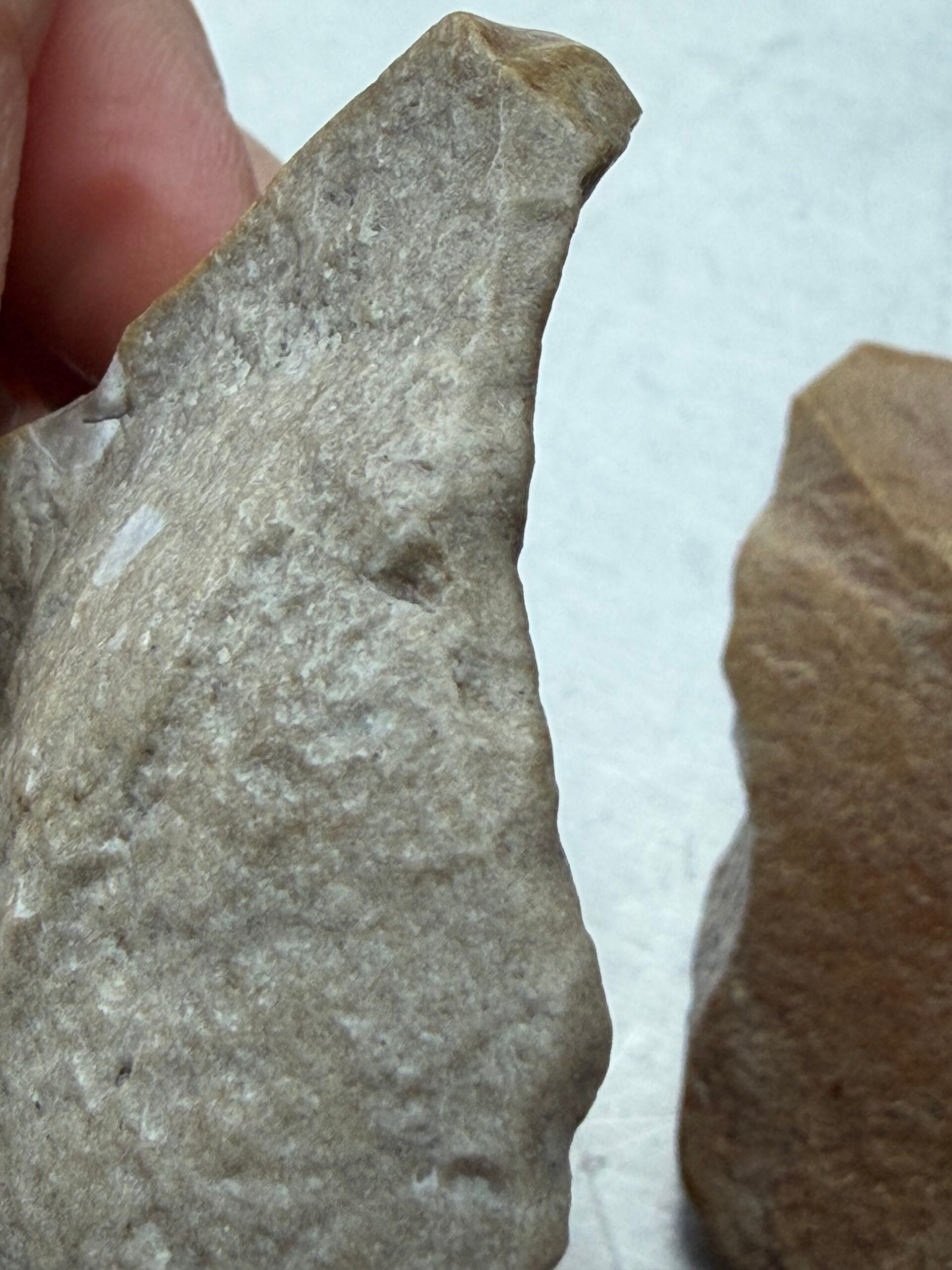
Aged Patina: The matte, “sugary” patina on the surface points to a very high age. This heavy weathering is a result of spending thousands of years in the Drenthe soil, potentially dating back to the Middle Paleolithic.
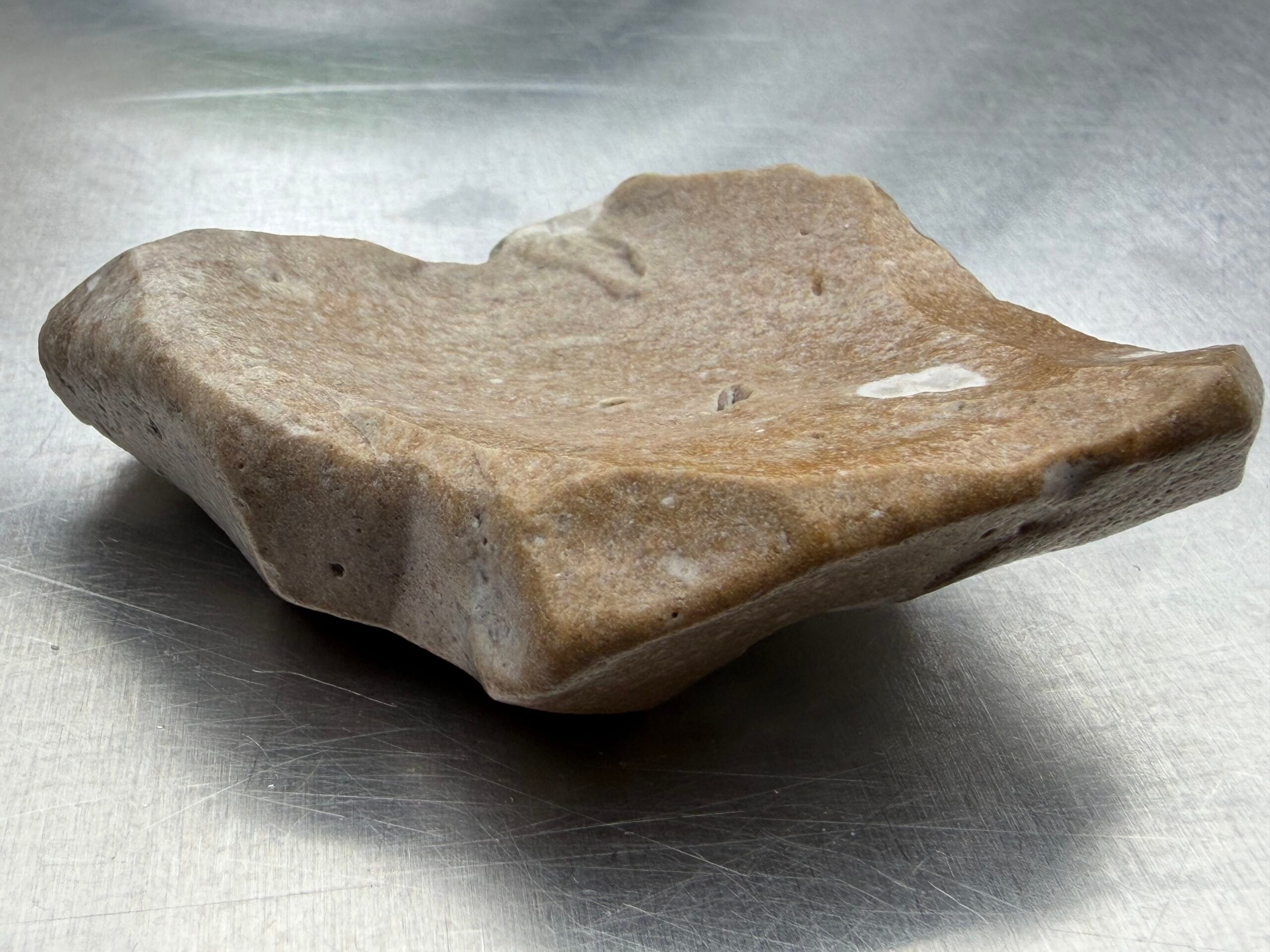


This find serves as a fascinating example of the fine line between natural processes and ancient technology, inviting a closer look at the subtle details that separate a geofact from a handmade tool.


 wpDiscuz


